
Selective Breeding as an Art Form
And, more pointedly, an Anglo-Saxon art form


You’re reading Steam Calliope Scherzos, a blog that’s theoretically rooted in media ecology and non-structuralist semiotics, believe it or not.
I. Intro - Beer and Hops
I recently finished reading Tom Acitelli’s The Audacity of Hops (2017 ed.), a history of craft beer in America. It isn’t a bad book in that it provides a thorough account of all the major developments that contributed to the rise of craft beer as we know it: Fritz Maytag’s work with Anchor Brewing, the spread of home brewing, the slow growth of microbreweries throughout the 1970s and 1980s, the rise of Samuel Adams and contract brewing, the more rapid growth of microbreweries in the 90s, the formation of the Brewers’ Guild, the creation of the Great American Beer Festival, and so on. But the book mostly focuses on the business side of the craft beer phenomenon, only giving a partial glimpse into craft beer as a cultural phenomenon that reached its apex in the 2010s before fading into the ambience of American life. I say “ambience” because even as people now declare that the millennial hipster urbanite’s moment in the sun is over, the landscape of alcohol consumption has still been changed forever. As I’m writing this, brewpubs are common just about everywhere in America, and grocery stores all across the country carry a large amount of local beer in a wide variety of styles and alcohol percentages. Two craft beer tycoons, Ken Grossman of Sierra Nevada and Jim Koch of Samuel Adams, have even become billionaires. All of this would have been unthinkable in the 1980s, which suggests to me that whatever we might think about the beverage itself — or the often irritating culture surrounding it — craft beer has won.
Still, though, the book is called The Audacity of Hops. Yes, it’s a clever pun on the Obama book, but it has “hops” in the title, and a huge part of the craft beer explosion had to do indeed with the many fascinating possibilities and innovative techniques that breweries were discovering with regard to the humulus lupulus plant. Acitelli mentions that the hop-forward IPA (“India Pale Ale”) is the most popular style of craft beer, and he does passingly explain that the Cascade and Centennial hop varietals (first commercialized in 1972 and 1990, respectively) were necessary for the growth of the “West Coast” IPA, a beer style that put a strong emphasis on bitterness complemented by piney, floral, and citrusy flavors. But he doesn’t give enough attention to just how crucial the selective cross-breeding of hops really has been throughout the growth of the industry, especially in the 21st century. The hop farmers who were quietly working in the background, spending sometimes decades just to create a single new strain, are the unsung heroes of the craft beer explosion largely missing from Acitelli’s account.
The book first came out in 2013, and then Acitelli wrote an updated edition in 2017, mainly to chronicle all of the big corporate buyouts that were happening at the time, so perhaps we can forgive him for this oversight. But consider this: usually when anti-craft-beer people think about what a “craft beer” looks like nowadays, they envision an opaque, viscous, and maybe even sludgy yellow-orange liquid with some sediment at the bottom and about a finger’s-width of foam at the top, sitting in a pretentious tulip glass being ogled by some overfed bearded urbanite — a beverage sure to be cloying, heavy, and hard to drink more than two sips’ worth. This is a style known as the “New England” or “Hazy IPA,” and it is distinctly different from the West Coast IPA. Whereas West Coast IPAs are bitter, piney, clean, and dry, New England IPAs are slightly sweet, fruity, turbid, and oily. Whatever one might prefer (and Americans, not being big fans of bitterness, seem to prefer the latter), the New England style could not have been possible without the new hop strains that had been debuting on the market, particularly from around 2008-2013.
When New England IPAs first showed up around the early 2010s, many craft beer experts were at first bewildered. Cloudiness was understood as a sign of sloppiness and poor fermentation practices (perhaps this is why Acitelli does not mention them in the 2017 edition at all). But it soon became clear that the cloudiness came mainly from a protein-heavy grain bill, and that the style is actually quite hard to do well because of the beer’s heightened sensitivity to oxygen exposure during the brewing process. Once people figured out the technique for brewing these “Hazy IPAs,” they came to dominate the market, forcing many of the West Coast IPA specialists to do their own version of one just to meet the consumer demand. If Cascade, Centennial, Chinook, and Columbus hops had still been the most flavorful kinds available, then this new type of IPA likely wouldn’t have taken off. But as it happens, a number of new hops had just been put onto the market, such as
Amarillo (released 2003)
Citra (released 2008)
Galaxy (released 2009)
El Dorado (released 2010)
Mosaic (released 2012)
Azacca (released 2013)
Vic Secret (released 2013)
Idaho 7 (released 2015)
And these hops didn’t really taste floral, herbal, or grassy (as with the classic Old World hops), nor were they piney, earthy, or citrusy like a grapefruit (as with the West Coast style). Instead, they invited comparisons to mango, papaya, passion fruit, pineapple, lychee, white grape, peach, plum, berries, and sweeter citrus fruits like clementines. Such hops certainly were being used in West Coast IPAs, and their “tropical fruit” flavors were detectable in that style, but New England IPAs added these hops at later stages in the brewing process so that the flavors found in their oils would be more noticeable. Given the timing of when these hop strains were released for commercial use, it is unsurprising that the New England IPA would eclipse the West Coast IPA in popularity, since it more fully exploited the hops’ potential. The brewmasters at places like The Alchemist, Trillium Brewing, or Tree House Brewing Company may have been able to perfect the technique required to bring out the sticky and resinous juiciness latent within these new hops… but just as important in craft beer, if not moreso, were the actual guys who created those hops in the first place. These were the guys on the periphery, quietly working at various farms located in North America, Australia, and New Zealand to breed more palatable strains into existence — guys like Jason Perrault, the most well-known name in that field, and someone whom Tony Magee, the founder of Lagunitas brewing, once called the most important person in American craft beer.
II. Artistic Expressions of Selective Breeding
Hops are just one example of how the relatively hidden process of selective breeding can inform consumer habits, even though the practice isn’t always given its due. Selective breeding is an interesting practice, because it’s rarely examined as a standalone activity, and it’s often a neglected aspect when we think about nutrition or even domesticated animals. Selective breeding is why your parents remember brussels sprouts tasting harsh and bitter, though ever since the end of the 1990s they have become quite pleasant. It is also the reason why corn has gotten a lot sweeter. It’s also why pit bulls have contributed to 66% of all deaths by dog bite from 2005 through 2019, while other dogs are comparatively quite wimpy. It is something humans have been doing for millennia, pretty much since the dawn of agriculture in fact, and it has radically changed the genetic makeup of the watermelon, the eggplant, the carrot, and the apple over long expanses of time, as well as the horse, the donkey, and the canine. However, it was not refined to a precise science until the Europeans more or less perfected the practice during the 1800s.
Since then, selective breeding has evolved into a kind of art form that treats the genes of living organisms as the media with which to experiment, and this is where it becomes a point of fascination. For me, anyhow. About a year ago, the poet Christopher Sandbatch remarked on social media that selective breeding is the great art form of the Anglo-Saxons, and for a good while I’ve grown to suspect that he is correct. While selective breeding for food is fairly humdrum, goal-oriented, and commercially widespread — and not a particularly Anglo-Saxon practice, since the guy who changed the flavor of brussels sprouts was a Dutch scientist, not an Englishman — there are other forms of selective breeding that don’t merely concern the improvement of essential fruits and vegetables, and they veer off into the realm of the aesthetic rather than the utilitarian. Here are just a few categories.
Foods that aren’t particularly necessary
I’ve already discussed the topic of hops, and it’s a good example of an herb that isn’t really necessary for the survival of civilization, since it pretty much only goes into beer and a non-alcoholic alternative called “hop water” (its bitterness overpowers basically everything else). But hop farmers have often worked with university-sponsored agriculture programs or on for-profit farms, and thus there’s less individual passion or obsession associated with the process. There are better examples of how hobbyists have used selective breeding to produce edible plants that were never really needed, and which no one even asked for.
Take, for instance, the Carolina Reaper hot pepper. From 2013-2023, this was officially judged the hottest pepper in the world, and it was developed over about ten years by the American breeder Ed Currie, a former stockbroker with near-suicidal depression who decided to turn his life around and moved to Fort Mill, South Carolina, the town in which his parents lived. There, he started to experiment with hot peppers in 2001, and he soon created the PuckerButt pepper farm in 2003. It’s now the largest organic pepper farm in America, even though Currie at first treated it as more of a side hobby, working at a bank until 2012. The Carolina Reaper was an early project of Currie’s, and he created it by breeding a Naga pepper he got from a doctor in Pakistan with a Red Habanero that a co-worker gave him from the Island of Saint Vincent. After about ten years of cultivation (it takes about 8-10 generations of breeding to stabilize distinct characteristics), the Carolina Reaper was born, and two years later, it entered the Guinness Book of World Records.
Currie learned about horticulture from his mother, who was a master gardener, and she taught him the art of cross-breeding with flowers like the Iris and the Lily. As Currie grew older, he experimented with selectively breeding marijuana (producing results he called “dangerous”), and then, after giving up drugs and alcohol entirely, he realized that hot peppers could give him a similar feeling of euphoria that hard substances once did. From that point on, he became obsessed with trying to create the hottest peppers in the world, and it has worked out pretty well for him. As I said before, the Carolina Reaper was the hottest pepper on record until 2023. The pepper that surpassed it, Pepper X, was also an Ed Currie original.
Gardens and flowers
So far, we’ve been looking at quite recent examples of selective breeding, and they’re products that demonstrate America’s unique preference for gastronomic extremism. But selective breeding in plants has been used for purely aesthetic reasons rather than dietary ones, and the garden is where the Anglo-Saxon practice of selective breeding has most clearly been able to showcase its artistry. In the nineteenth century, both the French and the English were heavily involved in selectively breeding flowers to make them look prettier, but the French were more prominent in that area for a good while. The Hybrid Tea rose (the kind that most of us picture when imagining one) was a nineteenth century French innovation, a cross-breed enabled by Joséphine de Beauharnais, AKA Napoleon Bonaparte’s wife, and her obsession with acquiring more roses to fill her gardens. However, in the twentieth century, the British horticulturalist David Austin became the most important rose breeder in the world, producing tons of hybrids known as “David Austin roses” such as the Abraham Darby introduced in 1985.
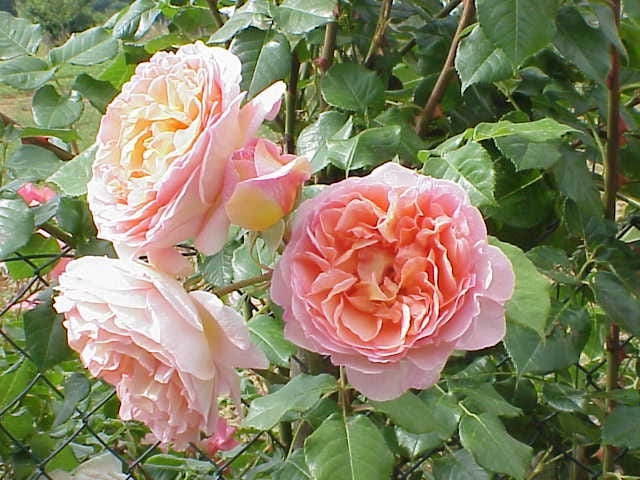
The Anglo-Saxons have done some other interesting stuff with flowers besides roses. The delphinium is another example of a flower in which the British overtook the French in creative breeding: the Frenchman Victor Lemoine produced the first Elatum hybrids in the mid-nineteenth century, but then James Kelway brought them to England in 1859, and they were extensively bred in the twentieth century by Charles Langdon and James Blackmore.
In Cornwall and Scotland, wealthy landowners were able to produce a number of hybrids of wildflowers that Joseph Hooker brought back from Sikkim, India (in the Himalayas) during the 1840s. Consequently, there was an explosion of Victorian aristocrats and wealthy bourgeoisie experimenting with them, and a favorite was the rhododendron plant. The Rothschild family in particular helped to produce a number of azalea and rhododendron hybrids, and these continued well into the twentieth century.
Meanwhile, George Russell, a self-taught gardener in York, spent about twenty-five years in the early twentieth century breeding lupins, completely transforming their color range and form to create flowers that were altogether new and even shocking in their beauty. Russell, like many breeders, was driven by obsession, refusing to show his work publicly for decades and only selling the stock later on in life, convinced that others would mishandle these botanical delicacies that he had created. Sadly, most of the original Russell lupin hybrids have been destroyed by diseases and insect pests, but some remain, and they’re quite striking.

Animals
For the category of animals, we can limit our inquiry to just two kinds: horses and dogs, since they form the most striking case studies.
Regarding horses, the British essentially created the Thoroughbred between around 1680-1750. Even though there had been plenty of animal breeding all across the world at that time, the speed of the process was quite rapid, and its intentionality was unusual. The breed itself came out of three Arabian stallions who had been imported to England: the Byerley Turk (c.1680s), the Darley Arabian (1704), and the Godolphin Arabian (c.1729). Breeders mixed them up with English mares, they remained absolutely focused on producing a distinct new type, and now every Thoroughbred today comes from one of those Arabian horses. There was one particular factor that allowed such a specific and intentional breeding project to take place: horse racing was quite popular and attracted quite a bit of gambling, and so there were financial incentives to breed faster horses.
What’s more interesting, though, is what came after the creation of the Thoroughbred. In 1791, James Weatherby published the General Stud Book, which was a breed registry for horses in Great Britain and Ireland, and this little contribution did something unique for animal breeding. Namely, it tracked the actual mating of these horses to ensure the purity of each lineage. If a horse was a true Thoroughbred, then it could trace its lineage back to the established foundation stock. Now, when you think about it, the reason that the Arabian horses were so fast is because the Arabs themselves were selectively breeding them to be that way. So selective breeding is a pretty natural human impulse when a culture has a reason to do it, even though it probably took the Arabs longer to get there. But by creating an approach of thorough documentation, the British allowed for both efficiency and creative possibilities in animal breeding that simply couldn’t have been achievable elsewhere. The stage had thus been set for advanced dog breeding.
Again, it was pretty common in Europe for wealthy landowners to own selectively bred dogs during the nineteenth century. But in 1873, the Kennel Club was established, which used the kind of logic found in the General Stud Book in order to record the various kinds of dogs, essentially inventing and institutionalizing the very concept of the standardized dog breed. As Wikipedia puts it, the Kennel Club would “maintain breed standards, record pedigrees, and issue the rules for conformation dog shows and trials and accreditation of judges.” All of this amounted to a specifically British aristocratic pastime, one that aestheticized the dog in ways that the continental European countries hadn’t. The Kennel Club even has its own little version of the Superbowl, the Westminster Dog Show, which I know mostly because it would typically cause a scheduling conflict for cable television, causing WWE Monday Night Raw to air on a different channel.
Humans (Eugenics)
It should come as no real surprise, given everything we’ve covered thus far, that the modern theory of evolution would originate in England through Charles Darwin, who in 1859 published On the Origin of Species. There was already a Victorian fascination with the concept of evolution, and many scientists were already trying to find the most convincing account of how gradual change in a species takes place. In 1844, for instance, Robert Chambers anonymously published Vestiges of the Natural History of Creation, and this was read aloud to Queen Victoria, who found it eminently fascinating. Other scientists actually discovered the theory of natural selection independently of Darwin and even published their findings before Darwin published his. One Patrick Matthew actually published On Naval Timber and Arboriculture in 1831, a book on how to grow suitable trees for Navy warships, and in it, there’s a digression that contains the theory of natural selection in a rough-hewn form.
As we can see, within the culture of Great Britain, people were thinking about these questions pretty seriously, and so it’s fair to say that Darwin was picking some low-hanging fruit when he wrote his theory. But then, Darwin’s cousin, Francis Galton, took this theory of natural selection and ran with it, pushing it into all kinds of different directions, arguably demonstrating through his sheer curiosity and creativity a greater knack for applied science than Darwin ever did. In 1883, he coined the term eugenics and started promoting it heavily, and for this reason, he is largely neglected or diminished by popular science historians as a moral heretic, even though he invented the concept of psychometrics (still in use today), he was the first to apply statistical methods to study human differences, he came up with the concept of regression towards the mean, he innovated various methods of collecting data on human communities (again, still in use), he popularized the phrase “nature versus nurture,” and — although this isn’t really connected to his work with anthropology — he also created the first weather map.
Although eugenics is often seen as a hateful concept borne of ill-intent, it was initially embraced by socialists and progressives, although the support from that camp faded in the wake of… well, a certain failed German political regime from the mid-twentieth century. Before then, supporters of eugenics included Woodrow Wilson, Teddy Roosevelt, Planned Parenthood founder Margaret Sanger (something that today’s pro-life conservatives never tire of mentioning), John Harvey Kellogg (the corn flakes man!), Fabian socialists Sidney and Beatrice Webb, sci-fi writer H.G. Wells, feminist author Charlotte Perkins Gilman, and even Helen Keller, of all people. This may seem surprising, but the idea is perhaps more intuitive than you’d think. In my own personal experience, I’ve asked hundreds upon hundreds of first-year college students as well as high school students what they think about marriage and children, and a rather significant amount of them will often say something like, “The world is getting too filled up with stupid people.” I’ll then ask them, “What do you think about making people get some sort of license to have children, with maybe a literacy test that they have to pass in order to breed?” and they’ll respond to the idea with enthusiastic approval. Then, I’ll say, “Oh, OK.” Clearly, they have not yet been taught by their teachers that such thinking is pure evil. Some probably have but don’t care.
Still, though, calling eugenics an art form is something of a stretch, since it has never been instituted for purely aesthetic reasons. Not in humans, anyway. Eugenics has often been promoted from a conservationist standpoint, and one of its major promoters, Madison Grant, was actually a wildlife preservationist who was responsible for establishing various National Parks across America. It has also been promoted in a Malthusian context, and in fact, there was a British organization called The Malthusian League which existed from 1877-1927, one of whose founders was Annie Besant, a hippie-dippie theosophist who wanted to promote birth control and contraception. Although it was not a strictly eugenicist organization, it was intertwined with the eugenics movement fairly closely, as they both wanted to limit and control the human populations.
Regardless of whatever we consider its moral value today, eugenics was a popular idea among Anglo-Saxon intellectuals, it still remains popular in softer forms (hence the outlawing of incest, which is totally eugenics-minded), and therefore, calling it “pseudo-scientific” is highly misleading. Actually, the only courageous way to morally oppose eugenics is by acknowledging that it could perhaps have some underlying truth, but then to say that it is nevertheless wrong to place humans along the same conceptual and ethical framework as plants and animals. If one’s main problem with eugenics is that it’s “pseudoscientific” (a consequentialist position), then this prompts the question: shouldn’t we just improve eugenics with better science?
In any case, aestheticized eugenics still remains fertile territory for exploration in science fiction and/or horror writing, at least for any author ballsy enough to explore the topic these days. We’ve seen eugenics touched upon in works like Gattaca, The Island of Doctor Moreau, and Dune, but I can’t think of any examples of fiction in which a demented and perverse aristocracy breeds humans to have strange new traits that we wouldn’t typically encounter in an unaffected population, just for the hell of having them. Additionally, eugenics remains an interesting filter through which to interpret contemporary social trends and political policies once you start thinking about how they will affect sexual selection. The British anthropologist Edward Dutton wrote a book called Woke Eugenics, in which he interprets social justice politics as operating functionally the same way as Social Darwinism once did, despite its strongest advocates expressing totally different intentions. I haven’t yet read the book, so I cannot speak to its merits, but I have made similar observations privately.
III. Selective Breeding as a Diabolical Practice
This post is going on longer than I intended, so I’ll conclude with a few points that could probably be expanded upon at a later time. A couple years ago, I wrote about the 1973 folk horror classic The Wicker Man, about a Hebridean island off the coast of Scotland called Summerisle, which is populated entirely by neo-pagans. Summerisle has a typically high produce yield, shipping its fruits to England annually, but the harvest from the previous summer was quite bad. A British police officer comes to visit the island after hearing of a missing girl there, and eventually comes to suspect that the islanders sacrificed the young girl to appease the Gods in hopes of a better harvest next year.
In my post, I discuss the island’s pagan origins: its leader, Lord Summerisle, had a great-grandfather who was a British agronomist, and he settled in the island because he wanted to introduce some new crops to it. He was selectively breeding fruits and then treating them with a certain inorganic fertilizer whose substance is never explained, but some local ministers found this blasphemous, and so he spread propaganda to the islanders and converted them to paganism. In one scene, Lord Summerisle gives a detailed account of what happened to the officer:
You see, Sergeant, his experiments had led him to believe that it was possible to induce here the successful growth of certain new strains of fruit that he had developed. And so you see, with typical mid-Victorian zeal, my great-grandfather set to work. But of course, almost immediately, he met opposition from the fundamentalist ministers, who threw tons of his artificial fertilizer into the harbour on the grounds that if God had meant us to use it, He’d have provided it. My great-grandfather took exactly the same view of ministers, and realized he had to find a way to be rid of them. The best method of accomplishing this, it seemed to him, was to rouse the people, by giving them back their joyous old deities; so he encouraged, as it were, a retreat down memory lane; backwards from Christianity, through the Ages of Reason and Belief to the Age of Mysticism.
The fruits these islanders produce are quite special, like “the Summerisle famous apple,” the “Star of Summerisle pear,” and the “Flame of Summerisle apricot.” And some of the fruits really shouldn’t be growing in Scotland at all: in old photos that the officer examines, we see various images of women holding watermelons, a fruit that could never survive in that region. Although the Christian ministers supposedly opposed the fertilizer in particular, the film seems as if it’s portraying the act of selectively breeding crops to survive in a normally inhospitable clime as equally diabolical in its aims just on principle alone.
The movie is thus not merely a recounting of “the rise and fall of an experimental biome on a Scottish island,” as one insightful blog puts it, but something of a statement on the manner in which the soundness and precision characteristic of the Anglo-Saxon mind could so quickly and easily lapse into scientific imprudence and outright irrationalism. Because, after all, Lord Summerisle turns out to be a rather deranged pagan rather than just a propagandist leading the islanders about. As the film comes to reveal, there is something a bit diabolical about toying with nature, documenting everything through formal registry systems as the British were starting to do in the mid-Victorian era, and then using such precision and managerial expertise to push plants and animals to limits previously considered unthinkable. The Wicker Man only focuses on the selective breeding of plants as the catalyst for a complete reversion to paganism, but in a way, this makes its point all the more trenchant.
Systematized and self-conscious selective breeding — or, the refusal to bend before nature’s wisdom and instead take matters into one’s own hands — would be the supreme art form of the same nation that brought us Paradise Lost. To become so adept at selective breeding, there has to be an element of irreverence toward God and nature, a sense of intellectual detachment, and a feeling of rootlessness; a rejection of fixed borders, hierarchy, and formality coupled with an enthusiasm for cosmopolitanism, international commerce, economic universalism, and (taken far enough) liberal capitalism. These are all characteristics that the British Isles have embodied more strongly than the rest of Europe. As the German political theorist Carl Schmitt observed in his Land and Sea (1942), Great Britain is a maritime power, one which created a specifically maritime style of world order. Britain’s values, in other words, have often reflected its general orientation to the world economy. Its style of rule has accordingly brought it into stark intellectual contrast with the rest of the European land monarchies — a contrast that persists even to this day, if you consider the opposition between analytic and continental philosophy in the humanities as just one example, not to mention the haste with which Britain fled the European Union. When considering the Anglophone countries and their adeptness with selective breeding in this light, we can see that all the geopolitical and socioeconomic factors were in place for them dominate not just the practice (e.g. through access to colonial territories all over the world) but also provide the definitive theory behind it.
What makes the situation funny, though, is how aggressively the Anglo-Saxons have come to reject applying selective breeding to humans. Your average WASP now considers eugenics to be the most utterly immoral practice ever, second only to total genocide, even as they’ve done more than any culture to formalize the procedures behind selective breeding and create the conditions that seem to lead inexorably towards eugenics, or at least an ersatz version of it. But the anti-eugenicism and anti-racism (a closely related view) of the liberal Anglo-Saxon are in many ways just as irreverent and Promethean as the systematization of selective breeding itself. Instead of accepting the inherent dignity of the human races by allowing them to produce offspring as they naturally are inclined to do, the Anglo-Saxon throws his hands up in the air and declares, “Race doesn’t exist at all! Everyone is equal!” and thus he preserves the intellectual freedom to keep observing the world through the lens of endless becoming as opposed to definite being. Both eugenics and blank slate theory reflect an ideology of anti-essentialism — they just happen to express the view in different ways.
Regardless of how we feel about these weighty matters, though, selective breeding is a cornerstone of economic and cultural life, and it has given us some great-looking flowers, some really spicy peppers, and some decent beer. God bless hops! God bless the Anglophone world! And God bless you.
update 5/17: lightly touched up the paragraph discussing Carl Schmitt for clarity